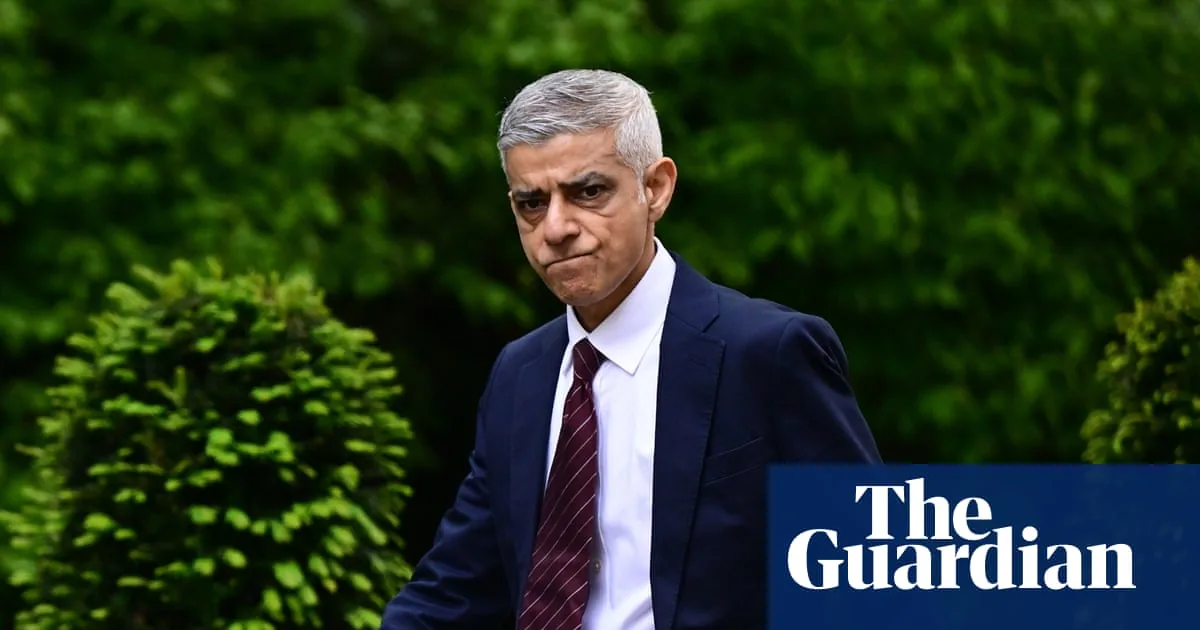
LONDON — London mayor Sadiq Khan has been convicted and fined over a 24-year-old Nissan Micra that was recorded as untaxed, with the case heard under the single justice procedure and decided in his absence. The court ordered him to pay a £220 fine, £85 in costs and £35.84 for the unpaid vehicle tax. City Hall has since said the car does not belong to either Khan or Transport for London, which raises the possibility that the mayor was wrongly prosecuted.
The case has drawn fresh attention because it was dealt with in private by a single magistrate in Herefordshire. That system has long been criticised by campaigners who say it can operate with little scrutiny. After the conviction was flagged to the Driver and Vehicle Licensing Agency, officials said they are now reviewing the case and the circumstances behind it.
City Hall says the car is not Khan’s or TfL’s
Officials at City Hall have disputed the basis of the prosecution, saying the vehicle at the centre of the case is not owned by the mayor and does not belong to Transport for London. That matters because the DVLA accused Khan of being the keeper of the vehicle when it was spotted as untaxed on 24 January.
The car was a blue Nissan Micra first registered in 2002, and records seen by the Press Association show its annual tax had run out in September last year. If City Hall’s position is correct, the conviction may have rested on an error about who was responsible for the vehicle.
There is also an unusual wrinkle in the paperwork. Court documents show letters about the unpaid tax were sent to Gordon Ramsay’s east London restaurant, rather than to TfL offices nearby. That detail has added to questions over how the case was handled and why the mayor was linked to the vehicle at all.
How the private justice system handled the case
The prosecution was brought by the DVLA, the agency responsible for driver and vehicle records, after the Micra was identified as untaxed. A magistrate sitting alone in a private hearing then convicted Khan without him being present. The court used the single justice procedure, which was introduced in 2015 as a cheaper way to deal with low-level offences.
Under that system, a magistrate can decide cases without an open hearing, and critics have argued that the process can move too quickly. Campaigners have described it as “conveyor-belt justice”, saying hundreds of cases can be handled in a day with very limited time spent on each one. Supporters say it is meant to reduce cost and speed up routine matters.
The mayor may now have to appear in court in person if he wants to challenge the finding and try to overturn the conviction. The DVLA has not yet explained why the paperwork linked him to the car.
Why the ruling matters for the DVLA and the single justice procedure
The case comes at a time when the single justice procedure is already under sustained scrutiny. It is currently being reviewed by government, and it was heavily criticised in 2024 after around 59,000 train-fare evasion convictions were overturned because they were unlawful. It also emerged that children had been wrongly convicted in the secretive system.
Since then, the courts process has continued to attract criticism over cases involving pensioners accused of failing to pay household bills, with campaigners questioning whether vulnerable people are being treated fairly. Khan’s case is different in substance, but it adds to concerns about whether the system can make basic errors when identifying the right person.
For now, the DVLA has confirmed that it is reviewing the matter. The agency has been approached for comment as questions continue over how a London mayor came to be fined for a car City Hall says is not his.
The latest UK news and stories from Bailey Universe.