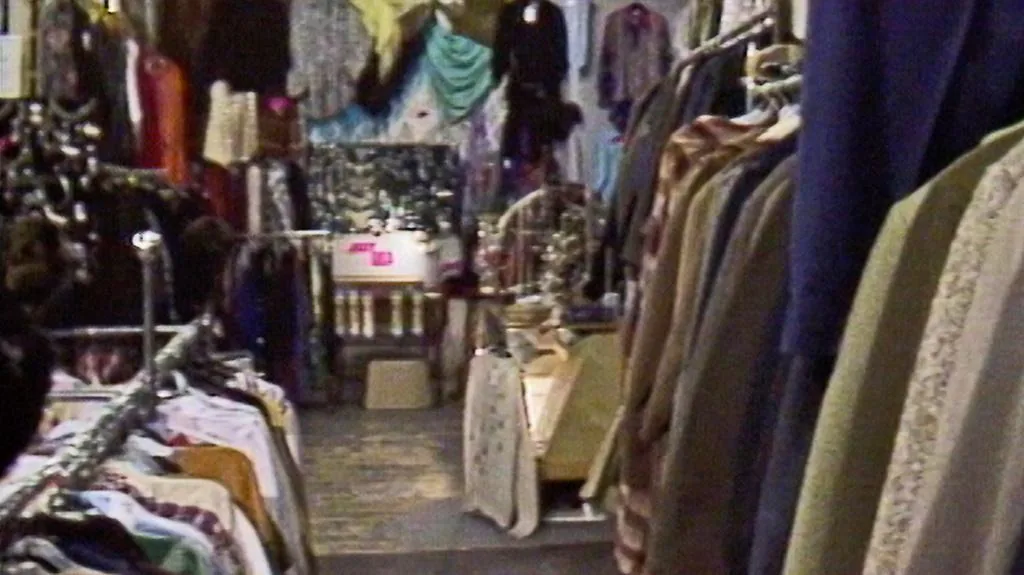
MANCHESTER — A BBC archive clip has revisited Affleck’s Palace, the indoor Manchester emporium of independent traders that was already described as a second-hand fashion mecca by 1986.
The footage comes from The Clothes Show, which was broadcast on BBC One on 17 November 1986. In the clip, clothes designer Jeff Banks reports on the city’s fashion scene and makes a point of checking out the building.
Affleck’s Palace had opened four years earlier, in 1982, and was quickly becoming a familiar shopping stop for generations of students.
The clip underlines how a market built around independent traders could become part of Manchester’s wider style identity, particularly for younger shoppers looking beyond the high street.
Why Affleck’s Palace stood out in Manchester’s fashion scene
Affleck’s Palace was not a conventional department store or chain-led shopping centre. Its appeal came from the mix of independent traders operating inside the building, which gave it a different feel from mainstream retail.
By the mid-1980s, that mix had helped it build a reputation as a place for second-hand clothing and alternative fashion. The BBC clip frames it as somewhere worth visiting for anyone interested in what Manchester was wearing and selling at the time.
The description of the venue as a “fashion mecca” suggests how quickly it had become known for distinctive clothes and a strong identity of its own. That kind of reputation often grows through word of mouth, especially among students and younger shoppers.
The archive material does not list individual stalls or traders, but it does show the importance of the building as a shared retail space for small businesses.
Jeff Banks’ visit shows how the venue reached beyond local shoppers
Jeff Banks’ appearance in the clip gives the story a broader fashion context. As a designer reporting on Manchester’s style scene, his visit points to interest in the city from outside the immediate circle of regular customers.
That matters because Affleck’s Palace was not only serving local demand. The archive footage suggests it had become notable enough to feature in national television coverage, which would have introduced it to viewers across the country.
In 1986, that kind of exposure helped reinforce Manchester’s image as a place with its own cultural and retail character. The palace’s independent traders were part of that appeal, offering something more specialised than standard high-street fashion.
The clip does not say that the venue was the only place of interest in the city, but it makes clear that it was an important stop in any survey of Manchester style.
What the BBC archive clip says about 1980s student shopping habits
The archive reference to Affleck’s Palace becoming a regular haunt for generations of students offers a useful snapshot of how young people shopped in the 1980s.
Students were often drawn to places that were affordable, individual and different from the bigger retail names. A venue with independent traders and second-hand clothing fitted that pattern well.
Manchester, with its universities and large student population, provided a ready audience for that sort of market. The clip shows that the building’s appeal was tied not just to fashion, but to a particular social scene.
Although the footage is brief, it captures the way a shopping arcade can become part of a city’s memory. For Manchester, Affleck’s Palace had already earned a place in the story of how style, youth culture and independent retail met in one indoor space.
The latest UK news and stories from Bailey Universe.