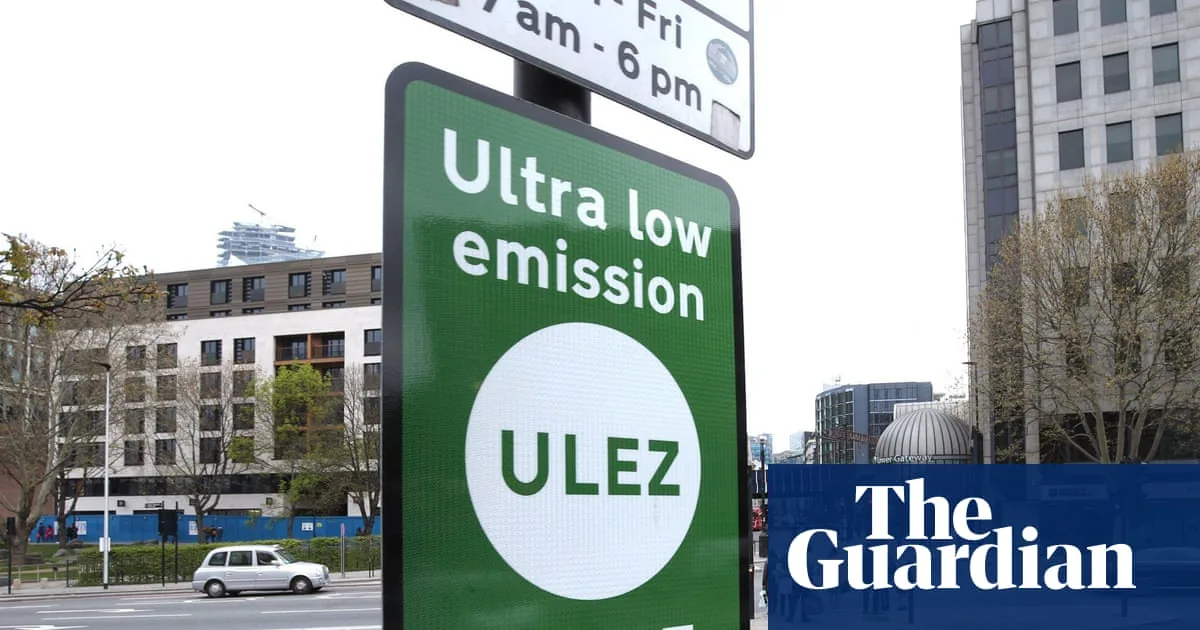
LONDON — Letters to the editor have praised London’s ultra-low emission zone after new research suggested it has improved lung size and function among children. Writers said the scheme shows what can be achieved when city leaders prioritise public health over the loudest political opposition.
The correspondence also called for similar action in other UK cities, with readers arguing that cleaner air should be treated as a basic right. One letter urged schools to be better protected too, suggesting that parents should have access to air-quality monitoring information so they can understand risks near classrooms.
Another writer said the Ulez debate had become a culture war, even though the people most affected are those living in polluted urban areas every day.
Readers say clean air should not depend on postcode
One letter from Newcastle upon Tyne argued that the success of London’s Ulez should prompt other cities across the UK to adopt the same thinking. The writer said the policy’s impact on pollution levels raises a wider question about whether clean air ought to be treated as a human right rather than a local luxury.
The same contribution criticised the lack of readily available air-quality information for schools. It asked why Ofsted or the Department for Education should not insist on monitors and publish data for each school, so families can see where children may be exposed to higher levels of pollution.
The point was not limited to London, but framed as a national issue about health protection, transparency and practical information for parents.
Sadiq Khan is praised for standing up to opposition
A second letter, from Worthing in West Sussex, thanked London mayor Sadiq Khan for backing Ulez despite criticism. The writer said his decision showed it is possible for a politician to act in the interests of the wider public rather than simply follow the noisiest voices.
That letter linked the issue to the pressures of climate change, saying the government has struggled to do the right thing consistently. In contrast, Khan was credited with showing leadership by taking a firm line on an unpopular but, in the writer’s view, necessary policy.
The message was that environmental measures should be judged by their benefits to health and society, not by how much resistance they draw from opponents.
Calls for greener streets go beyond congestion and emissions
A third letter, from Bucharest, said the struggle for cleaner cities has increasingly become entangled with wider cultural arguments. The writer said the real cost of that debate is borne by residents who live with traffic, fumes and noise every day.
London’s Ulez was described as a useful way of tackling several problems at once, including congestion, emissions and noise pollution. The writer also said such schemes can help create more space for pedestrians and cyclists, making streets easier and safer to use.
Looking ahead, the letter called for more bicycle-friendly roads, low-traffic neighbourhoods, trees and better public transport. It pointed to Paris as an example of a European capital that has changed through similar measures, and suggested cities could compete to become healthier and more liveable.
Study findings fuel wider debate over city air quality
The letters followed a study reported on 18 August that linked Ulez with better lung size and function among London children. That finding gave fresh momentum to arguments in favour of low-emission policies, especially in densely populated areas where traffic pollution is a daily concern.
For supporters, the evidence strengthens the case for extending similar schemes elsewhere in the UK and for building cleaner air into public policy rather than treating it as an optional extra. The correspondence also suggests parents, schools and local authorities may continue to press for clearer monitoring and stronger safeguards.
Although the letters came from different places, they shared a common view: that city air quality is a public health issue, and one that should be addressed with the same seriousness as other risks facing children and adults alike.
The latest UK news and stories from Bailey Universe.