LONDON — London’s streets have become harder to navigate for everyone using them, with cyclists, drivers and pedestrians all finding themselves in conflict with a patchwork of rules and habits.
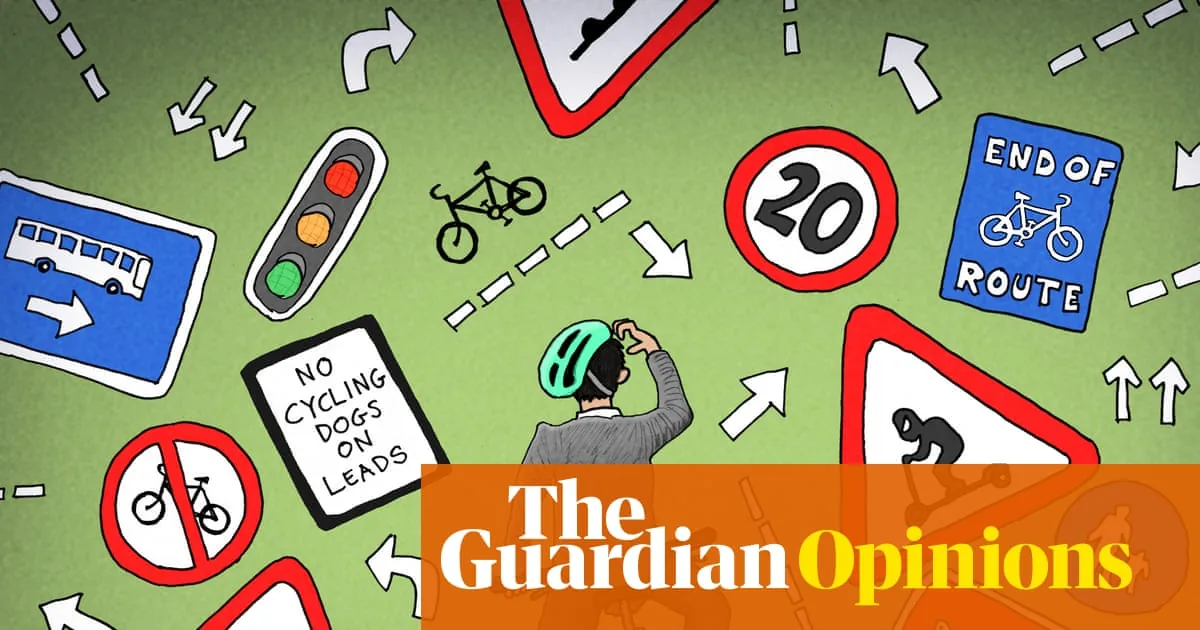
The column argues that traffic regulation has become both bureaucratic and muddled, leaving people unsure how to behave on busy roads and pavements. It says drivers trying to keep to 20mph limits are often overtaken and pressured, while cyclists are expected to behave like motorists at lights. At the same time, pedestrians now have to dodge e-bikes and e-scooters on pavements, despite bans. The overall picture is of a city where the rules no longer seem to match the reality of how people move around.
Shared-space ideas have already been tried in parts of London
The piece points to the ideas of Dutch traffic engineer Hans Monderman, who argued for shared space in cities, with fewer kerbs, markings and signals and more reliance on human judgement. Under that approach, road users are expected to watch out for one another constantly rather than depend entirely on signs and lights.
Although Monderman is little known in Britain, the column says similar principles were tested successfully at London’s Exhibition Road and Seven Dials. It also says the wider approach has been used across northern Europe, where accident rates have fallen. Copenhagen is offered as an example, with 45% of residents said to have cycled to work or school in 2023. The point made is that less rigid road design can work, but only when users accept a shared responsibility for safety.
Red lights, bike lanes and queue-sensitive signals are all part of the debate
The article says many London cyclists simply ride on when a junction is clear, especially because cycling is about keeping momentum. It argues that the behaviour is common enough to reflect how bike riders see the road, even if it leaves them technically in the wrong at red lights. For pedestrian crossings, the column suggests cyclists should dismount and cross on foot.
It also notes that traffic lights can now be made sensitive to queues and changed sooner to green so buses can move through more efficiently. Earlier this year, a policy director at Lime suggested lights should give priority to cyclists to improve rider behaviour and encourage more people to cycle. The article treats that as evidence that signal systems may need to be adapted to different types of road user rather than applied in a one-size-fits-all way.
E-bikes are changing travel across London but bringing fresh problems
London’s cycle network has expanded sharply, with the strategic cycle network now 352km long compared with 90km in 2016. The column says this reflects serious investment by the same planning authority that once backed the Motorway Box concept 50 years ago, showing how much the city’s transport thinking has changed.
At the same time, the rise of electric bikes is described as a growing problem. The piece says hire bikes and other e-bikes can be the quickest way to cross the city, but they also leave abandoned machines on streets and pavements. It argues that better technology is needed to ensure they are parked properly. The column also says some fast e-bikes, including the Freesky Alaska with a 250W motor, are effectively being treated as ordinary pedal bikes when they should be regarded as motorbikes and used on the road.
The column argues London needs smarter regulation rather than more confusion
The closing argument is that London is no longer the unusually pleasant city to drive in that it once was, because the bicycle has changed the balance of transport. Cycling is presented as a new freedom, but one that still needs sensible rules if streets are to remain usable for everyone.
That is why the piece concludes that regulation should be intelligent rather than simply strict. It accepts that cycling and urban movement always carry some risk, and that the risk is partly down to individual judgement. But it says the current system is too muddled, with traffic laws, road design and new technology pulling in different directions. The result is a city where each group of road users feels the others are getting in their way.
The latest UK news and stories from Bailey Universe.