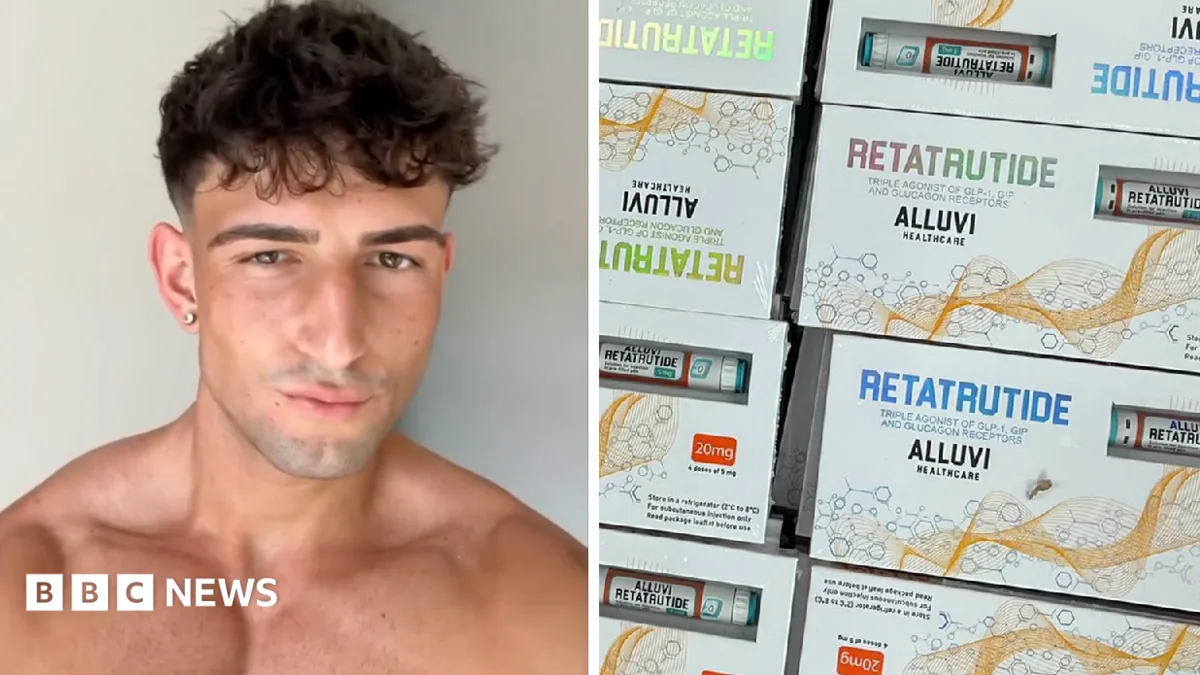
LONDON — The hunger for a new weight loss drug has helped create a fast-moving market in counterfeit retatrutide, with fake versions now being sold in the UK before the treatment has been approved for human use anywhere.
Eli Lilly’s experimental jab, nicknamed “reta”, is still in clinical trials, but copies are being offered through gyms, beauty salons, hairdressers, social media and even by flower sellers on the street. Health experts say this is one of the first times they have seen an experimental drug become so widely available as a fake.
The company and the Medicines and Healthcare Products Regulatory Agency are both warning that the products are unverified and may contain the wrong ingredients, or unsafe amounts of the active substance.
How fake retatrutide is being sold to UK buyers
Pharmacist Sehar Shahid, director of 24 HR Pharmacy, said people were treating illegal injections as if they were a normal consumer product. She said social media had made it easy for users to talk openly about where they buy it and who supplies it.
The BBC reported that a quick search on social media can lead to sellers offering batches of the drug within minutes, although buyers have no reliable way of knowing what is inside the vial. That uncertainty is central to the concern: the counterfeit products are described as retatrutide, but may not resemble the real drug being studied in laboratories.
Eli Lilly says nobody should take anything claiming to be retatrutide outside a company-sponsored clinical trial. It warns that illicit versions may contain unknown ingredients, contaminants, impurities, too much or too little active ingredient, or the wrong ingredient entirely.
Doctors say some users are ending up unwell after taking the copies
Clinicians say the side effects are already showing up in patients who have taken counterfeit weight loss injections. Endocrinologist Prof Donal O’Shea said young, fit patients were arriving at hospital with nausea, vomiting, diarrhoea and, in some cases, kidney failure.
He also said some personal trainers were supplying the product and injecting clients with it, while patients had little or no idea how much they had taken. The problem is made worse by the complexity of the dosing, because some versions need to be mixed with sterile, bacteriostatic water before use.
Tom Davies, 20, from Brighton, said he nearly ended up in hospital after accidentally taking eight times the recommended dose of a fake version he ordered from a Chinese supplier after hearing about it at his gym. He described severe bloating, diarrhoea and nausea lasting 72 hours.
Why the real drug is still years away from legal use
Retatrutide is still being tested for safety and effectiveness, and there is no guarantee it will ever reach the market. Eli Lilly says that in Phase III trials in the US, only about half of drugs are eventually approved by the Food and Drug Administration.
The drug is being studied because it works differently from current obesity treatments such as semaglutide, sold as Ozempic and Wegovy, and tirzepatide, sold as Mounjaro. If approved, it would be the first weight loss medication to act on three hormone pathways, earning the nickname the “triple G”.
The three hormones it mimics are GLP-1, GIP and glucagon, which together help reduce appetite, improve how the body processes nutrients and increase energy expenditure. Eli Lilly plans to apply for FDA approval early next year, with a legal launch in the US not expected until the end of 2027 at the earliest.
UK regulators and Eli Lilly are trying to shut down the trade
The MHRA says it has carried out raids and made several seizures of products claiming to contain retatrutide over the past year. It says the drugs are entering the UK through several different routes and that it is working to disrupt illegal importation and distribution.
Eli Lilly says it has reported more than 14,000 websites, adverts and social media posts that it считает are illegally marketing the medication. It is also taking action against peptide companies, influencers, compound pharmacies and wellness clinics linked to the fake trade.
Doctors say the wider challenge is to warn patients about the risks without dismissing the family of obesity medicines altogether. Prof O’Shea said GLP-1 drugs are a major advance in obesity treatment and in understanding appetite and cravings, but warned that black market versions remain dangerous. In the UK, retatrutide could not be available before 2028, depending on MHRA approval.
The latest UK news and stories from Bailey Universe.