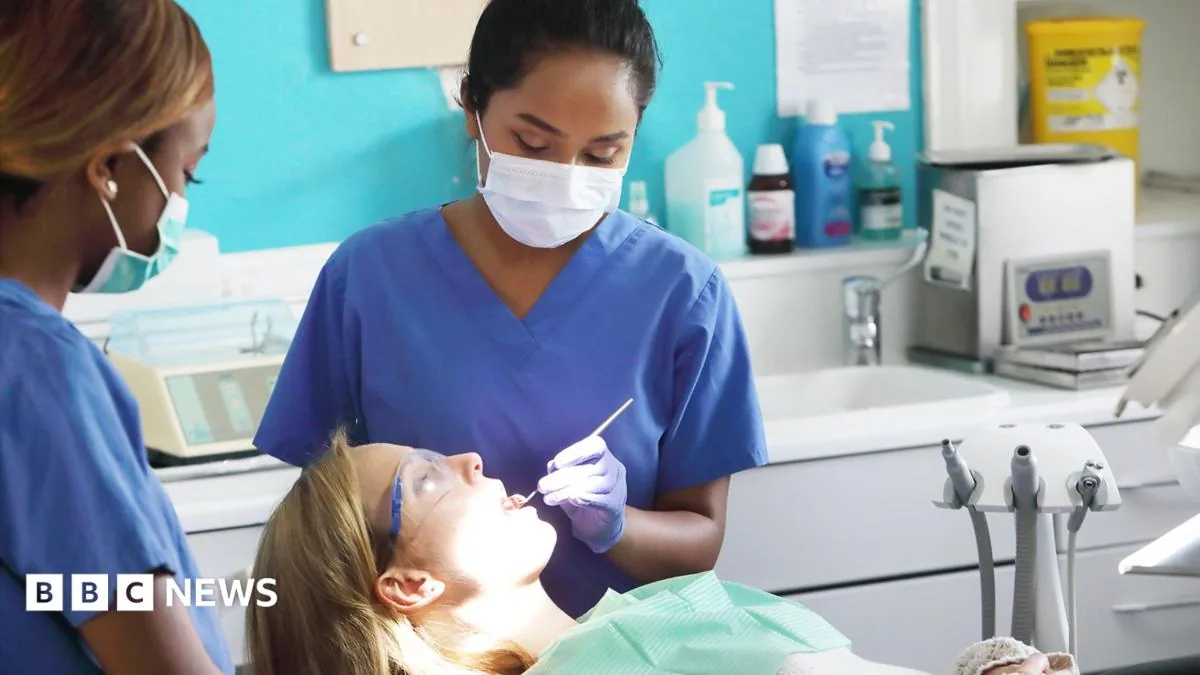
LONDON — Hundreds of dental practices in England have stopped offering NHS care over the past 10 years, according to analysis from the Nuffield Trust. The figures suggest the service is moving further towards a two-tier system, with access increasingly shaped by where people live and whether they can pay privately.
Nearly 600 practices have withdrawn from NHS dentistry during that period. The decline has been particularly sharp in the South West and East of England, where the number of practices continuing to provide NHS treatment has fallen markedly. In some communities, the changes have made it close to impossible to secure an NHS appointment.
The findings come as ministers say they want to tackle so-called dental deserts, while dentists argue the current contract makes NHS work financially unsustainable.
Cornwall, Devon and Northamptonshire see some of the steepest falls in NHS provision
Several counties have seen especially steep drops in the number of practices still offering NHS treatment. Cornwall, Devon and Northamptonshire are among the areas with the biggest reductions, according to the Nuffield Trust analysis.
Cornwall stands out in particular. More than a quarter of practices that once provided NHS treatment there no longer do so, making it one of the clearest examples of the retreat from NHS dentistry. In Somerset, fewer than one in five dental practices now offers NHS services.
The analysis suggests more than one in 10 dental practices that previously offered NHS care have now left the service. Although overall practice numbers in England have risen over the last decade, the number doing NHS work has fallen, showing that the issue is not simply the total number of dentists.
Patients say finding treatment has become almost impossible in some areas
The pressure is being felt by patients as well as practices. NHS dental activity is 8% lower than before the coronavirus pandemic, while six in 10 adults have not seen an NHS dentist in two years, according to the NHS GP Patient Survey.
Of those who tried to get a new appointment in the past two years, only 38% were successful. The figures help explain why many people say they are unable to find care when they need it, especially in areas where practices have handed back NHS contracts.
Alan, 83, who lives in Somerset, said he had stopped trying to find an NHS dentist because getting an appointment anywhere near his home would be impossible. He said he had adapted to having only one tooth left, joking that he had learned how to eat Brazil nuts.
Dentists warn the current contract leaves NHS work running at a loss
Practitioners say the problem is being driven by the economics of NHS dentistry. Vivak Shah, who runs three dental practices in Northamptonshire, said he still provides NHS treatment but does so at a loss and no longer takes on new NHS patients.
He warned that if more practices stop providing NHS care, patients could end up in pain or seeking help elsewhere in the health service, including hospital accident and emergency departments. Shah said the private side of his business can only cover so much of the loss from NHS work.
Other dentists say the strain has damaged trust in the system. Jim Sykes, a dentist in Hexham, handed back his NHS contract in 2024 after deciding the work was not sustainable financially. He said he would be nervous about taking on another NHS contract even if a better offer were made.
Government plans contract changes while campaigners call the crisis shameful
The government says it is changing the dental contract and training more dentists in areas with the greatest need. It also says newly qualified dentists will be required to work in the NHS for at least three years.
The Nuffield Trust says this is not a shortage of dentistry, but a shortage of NHS dentistry. Mark Dayan, the trust’s head of public affairs, said repeated contract hand-backs across the country amount to a quiet shift towards a two-tier service, with access depending on ability to pay and local availability.
The British Dental Association says the situation is the result of decisions taken by successive governments, while campaign group 38 Degrees has called the crisis shameful. The group says people are being forced to pay for treatment they cannot afford or live with pain and further complications after being denied NHS care.
The latest UK news and stories from Bailey Universe.