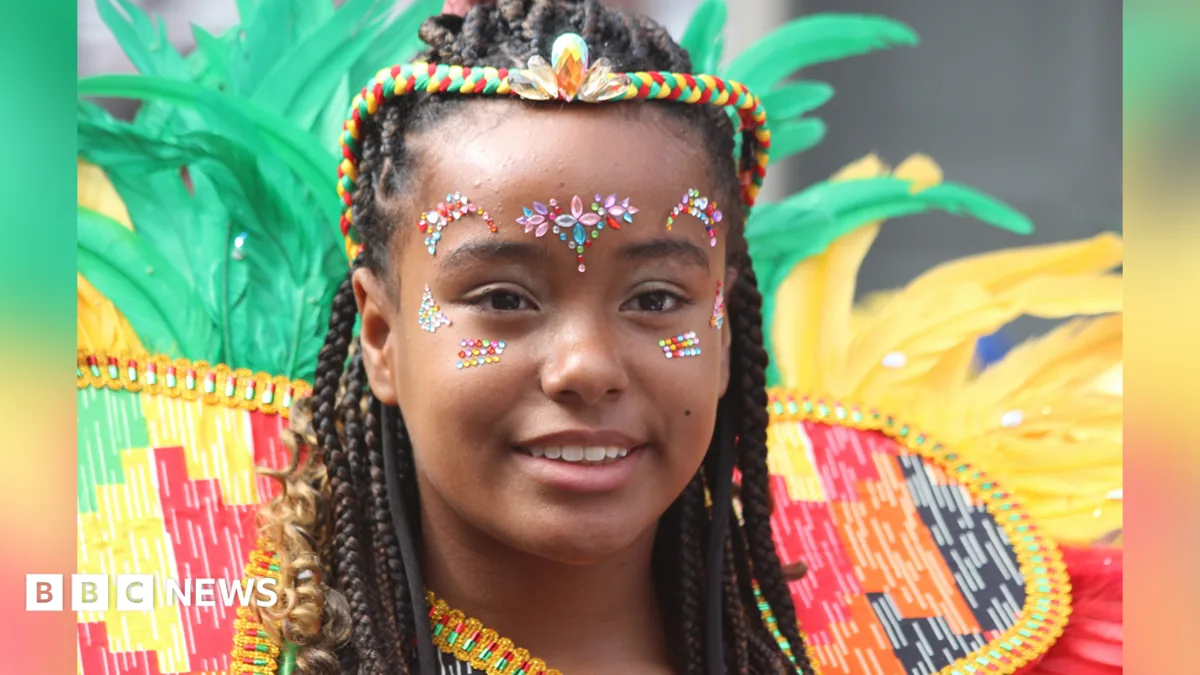
LONDON — Notting Hill Carnival has marked its 60th year with a day of music, dance, food and family celebrations in west London, where the atmosphere was already building before the Sunday parade had even got under way. Sunshine briefly brightened the streets as sequins, flags and costumes filled the area, while sound systems, steelpan groups and dancers added to the noise and colour.
Many visitors were already covered in paint from J'ouvert, the early-morning tradition that opens Sunday’s festivities. Families were especially prominent, with children enjoying the celebration alongside long-time carnival-goers and first-time visitors. Organisers expect about two million people to come to this part of west London over the weekend, underlining the scale of a festival that has become Europe’s largest street event.
Families and first-time visitors add to the anniversary atmosphere
Among the crowds was Triny-Savannah, who is 18 months old and visiting with her mother Twinsy, who had travelled from Paris. Twinsy said the event means a great deal to her family because her parents used to bring her and her twin sister, and she is now continuing that tradition with the next generation. She also described the carnival as a celebration linked to the abolition of slavery and said it carries important memories.
Eight-year-old Alex was also attending for the first time, with his mother Tiana, who lives in Enfield. Tiana said she had gone to Carnival regularly when she was younger and was pleased to return with her son. Alex said he loved how busy it was and liked the sense that everyone was together. His water pistol loaded with paint summed up the playful feel of the morning for many younger visitors.
Food stalls and street sounds keep the celebration moving
Alongside the music and movement, food was a major part of the day’s draw. One of the stalls was serving doubles, a Trinidadian snack made with flatbreads and curried chickpeas. Dave, who bought one, said the taste reminded him of Trinidad. The stallholder, Christina Bedau, said her business, Sweet Hand Cuisine, has come to Notting Hill Carnival for seven years and that she would sell at least 500 doubles over the weekend.
She said she has to attend because regular customers return every year and would be disappointed if she did not. Nearby, another trader was selling handmade fans from Ghana made of cotton. The crowd meant card payments could be awkward, with the trader still relying heavily on cash as trade picked up. The food and shopping added another layer to the carnival beyond the procession itself.
Steelpan, floats and Caribbean pride define the Sunday parade
Once the parade gathered pace, the sound of booming truck-mounted systems, dancers and steelpan players filled the route. Sunday’s procession is smaller than the main Monday event, but it still brought a vivid display of floats and performers through the streets. Heather, who said she has attended every carnival since arriving in the UK in 1992, described the event as a chance to recharge and immerse herself in her culture.
Other revellers also used the day to celebrate their heritage. Daniel was with his family in matching St Vincent outfits, with his five-year-old son Asher riding on his shoulders after getting tired. Daniel said his wife Rachel is from St Vincent and that they had recently returned from their first family holiday there. For him, the carnival was a perfect event for representing that Caribbean identity in west London.
A festival transformed the area and still needs funding
The anniversary also highlighted how dramatically Carnival changes the neighbourhood each year. The streets around Notting Hill were transformed into a packed, colourful festival space, with visitors taking photos and pausing to watch the floats pass. The event is widely described as Europe’s largest street festival and the second-largest carnival in the world after Rio de Janeiro.
As the day drew on, a poster calling for donations caught the eye with the message “Fund 60 more”, a reminder that the carnival depends on continued financial support. The appeal pointed to the organisers’ desire to keep the event going for future generations. For many people attending on Sunday, the milestone felt less like a look back than a promise that the festival’s music, food and cultural pride will continue for decades to come.
The latest UK news and stories from Bailey Universe.