BLAENAVON — A vast wildfire above Blaenavon is showing early signs of slowing after more than three weeks of burning, with firefighters, soldiers and specialist crews continuing to tackle a deep-seated peat fire spread across more than 4,000 hectares.
The blaze has put homes, farmland and property at risk on the hillside overlooking the Eastern valley town. Military personnel arrived two days ago and have joined the emergency response after a weekend in which at least 13 other fires broke out across the valleys, stretching local resources further.
South Wales Fire and Rescue Service asked for military support as crews faced one of the most difficult wildfire periods in years. Nationally, around 36 fires were still burning, and 11 had been declared major incidents, with hot, dry conditions leaving services under severe pressure.
Peat and heat have made the hillside fire especially hard to control
Fire crews say the blaze has been unusually stubborn because it is burning through underground peat as well as the surface heather. Jamie Windsor, a group commander at Ebbw Vale station, said the fire can appear under control before flaring up again elsewhere as heat remains trapped below ground.
He said the peat has continued to burn deeply because the nights have not been cool enough to help extinguish it. After three decades of firefighting in south Wales, he said he had never seen anything comparable.
The conditions have made the work physically punishing and unpredictable. Small flames have repeatedly appeared around blackened trees, while other areas have reignited with little warning, forcing crews to keep returning to the same ground.
The wider summer has been marked by extreme heat and little rain, adding to concern about the scale of the wildfire season. Fire services across the UK have been called upon to help with incidents that would usually have been more localised.
Soldiers, drones and helicopters are helping crews hold the fire line
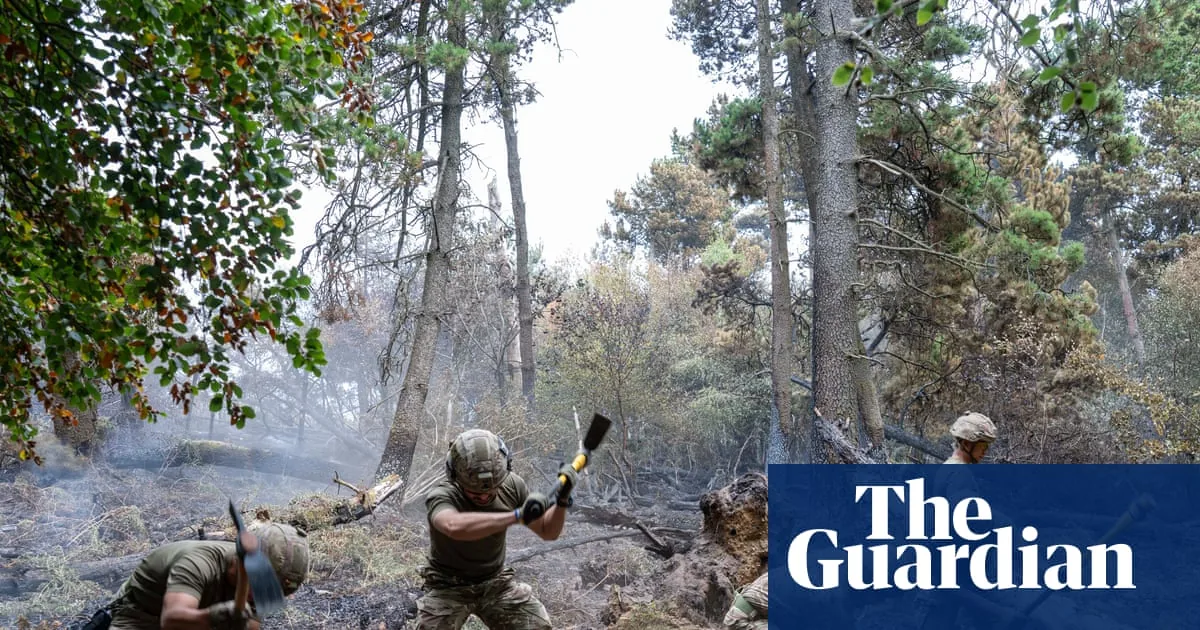
On Sunday, soldiers from the Queen’s Own Gurkha Logistic Regiment were digging firebreaks and turning over smoking soil in an effort to stop the blaze spreading further. Their work took place close to active flames, with crews watching for sudden changes in the fire’s behaviour.
A civilian-contracted helicopter has also been used, collecting water from a large plastic pool supplied by a local dam before flying repeated runs over the hillside. The aim is to douse pockets of fire that keep smouldering and threatening to re-ignite surrounding ground.
Firefighters from across the UK have been sent to assist, using an old steel mill on the edge of Blaenavon as a temporary base for planning and logistics. New thermal camera drones and specialist response vehicles, introduced by South Wales Fire and Rescue Service this summer, have also been deployed.
Darren Cleaves, a group manager with the service, said the drone technology has made it easier to identify exactly where crews need to go while also improving safety for those on the ground.
Residents near the hillside say the blaze has brought back old fears
People living on Llanover Close, the road that sits at the edge of the village, have spent weeks watching a constant stream of fire engines, water tankers, tractors and other equipment heading up to the forestry track above their homes. The response has so far helped protect houses only a few hundred metres from the fire.
Cindy Rogers, 60, who lives in the last house where Blaenavon meets the hillside, said a 2004 fire on the mountain nearly reached her property. She said climate change made her worry about the future, although she did not want to move unless she had to.
Another resident on the road, aged 89, said he had lived there since it was built and was now more concerned about flooding than fire, after his basement flooded last winter. The area has suffered flash flooding in recent years, leaving some residents to feel exposed to both extremes of weather.
Fire and Rescue Service chiefs say the scale of the emergency has been far beyond what they normally face, with call volumes rising sharply as crews deal with the continued risk across south Wales and beyond.
Drought, arson cases and hotter summers are adding to the pressure
Fin Monahan, chief fire officer of South Wales Fire and Rescue Service, said the Blaenavon blaze may finally be easing, but he stressed that the summer has been unlike anything his teams usually encounter. He said morale remained high even as call volumes rose from about 1,000 a week to 7,000.
Monahan also said arson had been a major factor in this summer’s fires in south Wales, although investigations are still under way in many cases. Four teenage boys from Porth were detained on suspicion of arson on Saturday and later released on bail.
Elsewhere, arrests have been made over fires in Stoke-on-Trent, King’s Norton and east London. The wider picture has been shaped by drought and repeated heatwaves, with the Met Office saying the UK was on course for its hottest summer on record by average temperature.
The Met Office has warned that rain and cooler weather may help bring the fires under control, but they are not guaranteed to end drought conditions quickly. The agency also says a wetter, stormier winter is possible as weather patterns shift later in the year.
The latest UK news and stories from Bailey Universe.