GRAVELINES — People-smuggling gangs are changing tactics in the Channel after a drop in the supply of small boats reaching the UK, according to a BBC investigation. The shift has seen more migrants loaded on to larger craft, including so-called mega dinghies, as criminal groups try to adapt to tighter policing on the French coast.
The changes come as the UK and France prepare new measures to increase the number of police officers patrolling the shoreline. The latest efforts are being announced as Sir Keir Starmer prepares to host French President Emmanuel Macron at Downing Street for the first time since becoming prime minister.
The investigation also found that gangs are demanding higher prices, insisting on cash payments, and asking people to wait longer for their chance to cross. Emergency teams on both sides of the Channel are increasingly concerned about the risks posed by bigger boats carrying more people.
How the gangs are adapting to fewer crossings
French officers say they are now stopping around two-thirds of small boats before they can reach the coast, which has reduced the number of opportunities for launches. That pressure appears to be forcing rival gangs to cooperate, loading more passengers on to fewer and larger boats rather than relying on a steady flow of smaller ones.
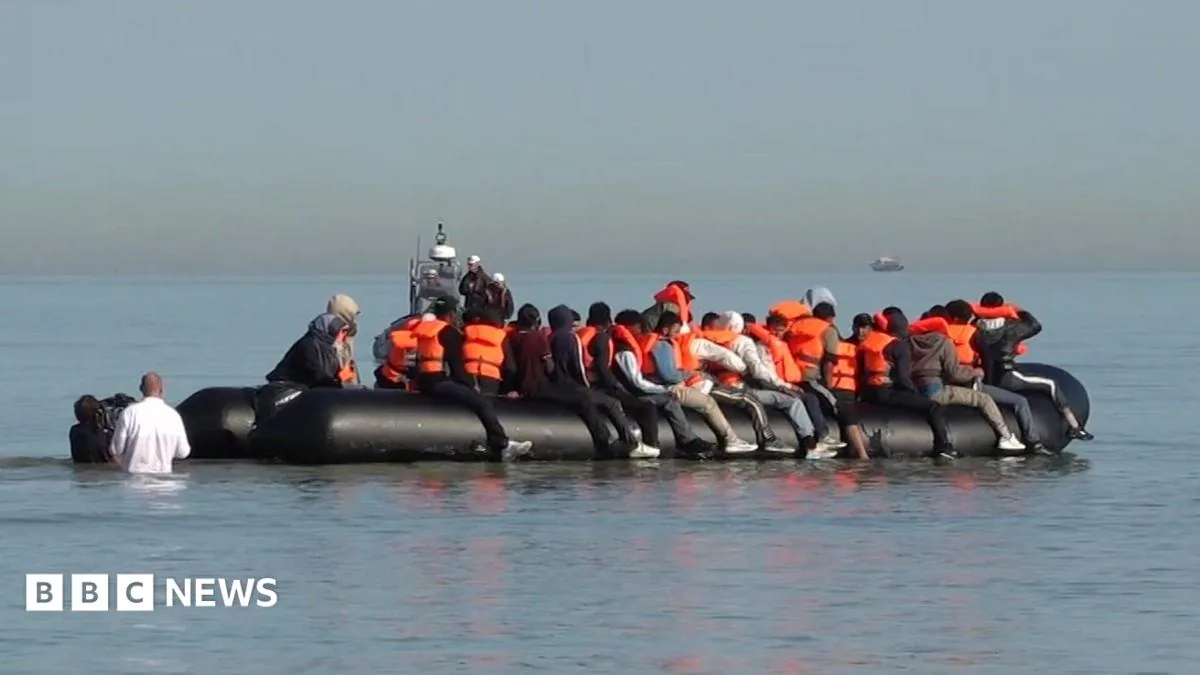
Gang members told BBC sources that more mega dinghies are being prepared. One recent boat was 15 metres long and carried a record 230 migrants towards the UK, prompting criticism of both ministers and French police when images of the crossing circulated widely.
On 4 August, 170 people had to be rescued after a boat caught fire in the middle of the Channel. That incident underlined the dangers of overloading vessels and the strain on rescue services when crossings go wrong.
Those trying to make the journey are also being charged more. The gangs are reportedly asking for up to €2,000, about £1,700, per person, compared with around €1,300 a year earlier.
What a daytime launch on Gravelines beach showed
During a low tide at Gravelines beach, the BBC team saw one small boat launch in daylight rather than under cover of darkness. A dozen or so migrants emerged from the dunes at around 09:30, wearing orange life jackets bought from a local sports shop.
Instead of running, the group moved in an organised way. They waited in shallow water while a taxi boat, launched from further along the coast to avoid detection, came in to collect them. The boat had actually set off from Belgium, showing how far gangs are now forcing vessels to travel before a crossing even begins.
The boat made five separate collections over three hours as more migrants entered the water to wait their turn. By 12:11, it finally headed into the shipping lane with 82 people on board. Everyone on that boat eventually reached the UK, with the Coastguard compelled to rescue people once they radio for help in British waters.
Observers on the beach described a strange contrast between holidaymakers and migrants preparing to risk the crossing, with police watching from the shore as the boarding process became increasingly frantic.
Why the crossings are taking longer to organise
Charity workers in northern France say stronger policing has made gangs more cautious. Instead of launching in the dead of night, they now see midday as a better window because taxi boats take longer to arrive and can be coordinated more carefully.
People waiting to cross are also being told to stay put for longer. Rather than waiting a few days for another attempt, many are now stuck for weeks or even months, depending on the weather and the gangs’ arrangements. Officials say crossing conditions usually need light winds and relatively calm waves for a small boat to have a chance of making it across.
To reduce the risk of being spotted, migrants are increasingly sleeping closer to the beach in woods or among the dunes rather than in larger camps, where they would normally have access to food, water, washing facilities and medicine.
Tensions at the camps as pressure builds on the coast
At the largest settlement at Loon-Plage, near Dunkirk, migrants described repeated failed attempts to cross, with some saying they had tried dozens of times. One Egyptian man said police had stopped them from leaving and destroyed the boats, adding that he wanted to reach the UK to work and obtain legal papers.
The atmosphere in the camp appeared more uneasy than on previous visits. Riot police had cleared tents the same week, and around 400 migrants preparing for a taxi boat in the nearby Hardelot forest were forced back the day before after several fires broke out.
The situation turned violent when a smuggler tried to stop filming. After agreeing to end the recording, he attempted to grab the camera and then threw stones from close range, striking the cameraman above the eye. He later needed a few stitches.
Despite the drop in crossings, the broader picture remains difficult for the authorities. Thousands still enter the UK illegally by small boat each month, and the gangs continue to adapt as they look for new ways to profit.
The latest UK news and stories from Bailey Universe.