SOMERSET — Cider producers across Somerset say the long summer drought has left orchards badly damaged, with some trees producing no fruit at all and others dropping apples before they ripen. Growers say the shortage is already affecting this year’s cider and could weaken production again next year if dry weather continues.
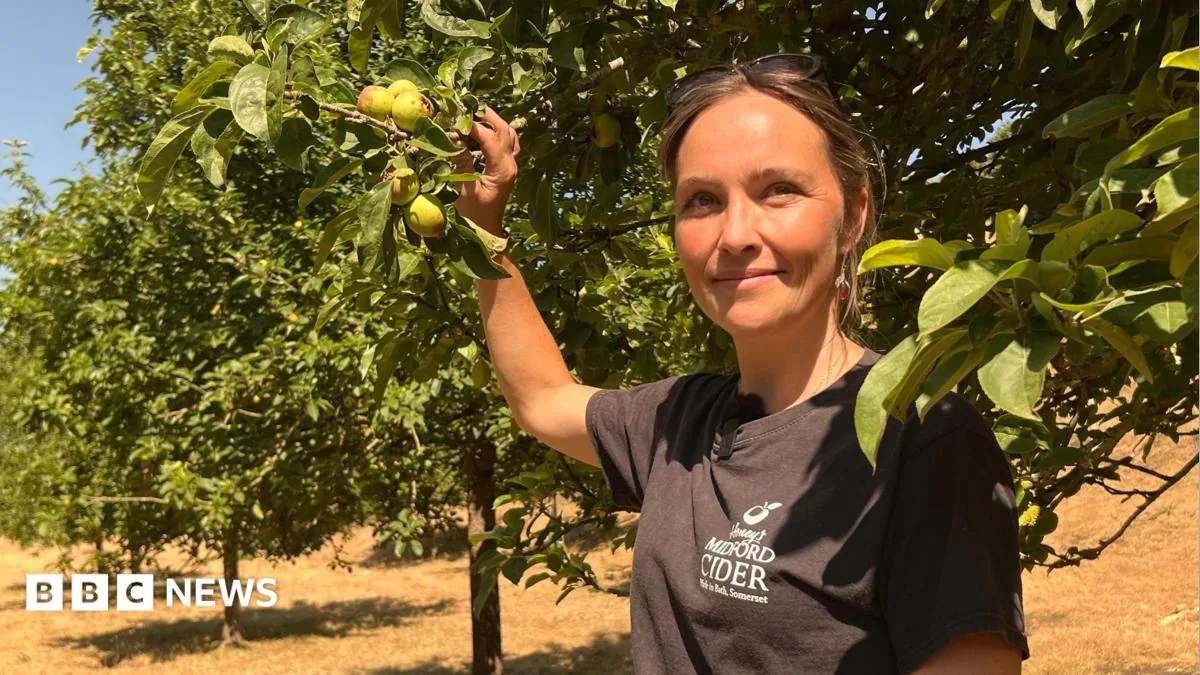
At Honey’s Cider near Bath, Kimberly Jones said her orchard had been hit hard after a second dry year in a row, leaving trees stressed and fruit levels far below normal. She said the orchard may produce only about a tenth of its usual crop. Elsewhere, producers described the situation as decimated, with sunshine helping sales but doing little to solve the shortage of apples.
Orchards near Bath report their smallest harvests in years
Walking through her orchard just outside Bath, Jones said there were barely any apples on the trees. The 25-year-old site is facing its driest year yet, following another dry season in 2025, and that combination has meant many trees have put their energy into survival rather than fruit.
Jones said Honey’s Cider makes drink only from fresh juice pressed each year and does not use apple concentrate or industrial ingredients. That means a reduced harvest directly limits how much cider the business can produce. She said sales have held up well in the hot weather, because people want cider on warm days, but the problem now is growing enough fruit for the next season.
She said the orchard might reach 10% of its normal crop, and even that estimate could be optimistic. For growers who rely entirely on their own apples, the loss is immediate and leaves little room to make up the shortfall elsewhere.
Some Somerset farms are refusing to harvest apples that have already rotted
Near Highbridge, George Scott said the family business that began pressing apples in 1954 is also dealing with a major drop in fruit. The farm normally produces nearly a million litres of cider a year, but he said this season is far from ordinary. One orchard that would usually yield 20 to 30 tonnes may produce only a fraction of that.
Scott said some neighbouring growers are also reporting severe losses, with one farm that usually turns out 200 tonnes now down to about 30. Although cider can be stored from year to year, he said the bigger concern is what the drought is doing to the trees themselves.
At Orchard Park Farm near Shepton Mallet, Neil MacDonald said the apple harvester was being used early not to collect fruit for cider, but to clear apples that had fallen and rotted. He said the trees had dumped fruit to protect themselves from the lack of water, leaving some orchards with about half their crop lost before picking.
Climate pressures are changing both yields and cider flavour
MacDonald, who manages more than 1,000 acres of Somerset orchards, said newly planted trees now need watering if they are to survive. He said that a few years ago growers could plant and let nature take over, but irrigation has become increasingly necessary for young trees. For large cider orchards, though, watering hundreds of acres is not practical.
Mike Kendon, a climate scientist at the Met Office, said weather that once seemed extreme is increasingly being treated as normal. Growers are already adjusting by grafting different varieties on to existing trees, especially where older apple types are struggling in hotter, drier conditions.
MacDonald said one key Somerset cider apple, Dabinett, needs a cold snap to produce properly, and that the mild winters of the past two years have hurt yields as well as the drought. He warned that if the region gets another dry year, the pressure on orchards could become even harder to manage, and the taste of West Country cider may shift too.
Growers warn the damage could affect future harvests as well as this season
The immediate worry for many producers is not just the size of this year’s crop, but what repeated drought does to orchard health over time. Trees that are stressed for two consecutive summers may be less productive again next year, even if weather improves. That could leave cider makers with fewer apples, reduced juice volumes and less flexibility when filling their tanks.
For businesses such as Honey’s Cider, the problem is especially acute because production depends entirely on the current season’s juice. Larger producers can keep cider in storage, but they still need healthy orchards to replenish stock in future. Somerset growers said the hot summer has boosted demand for cold cider, yet the same conditions are undermining the apple supply needed to keep the industry going.
With climate scientists warning of more hot, dry summers, producers say they are being forced to rethink how Somerset cider orchards are managed and what fruit varieties will survive in the years ahead.
The latest UK news and stories from Bailey Universe.