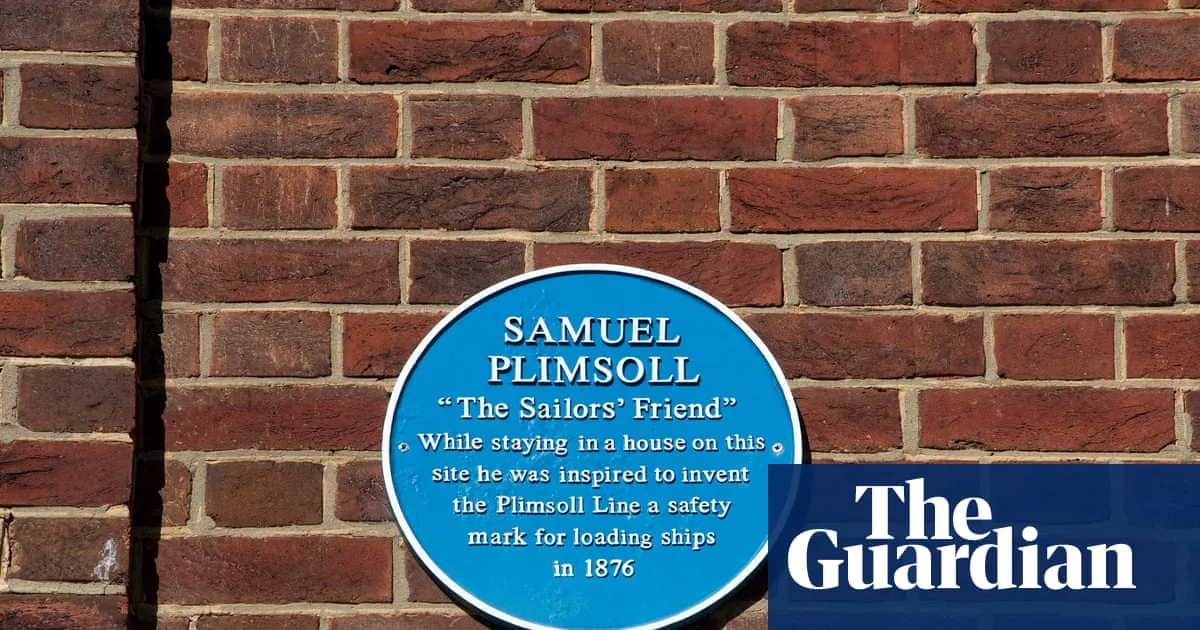
LONDON — A London reader has argued that Samuel Plimsoll’s safety work has been forgotten by many people, even though it helped make shipping far less dangerous. The letter was prompted by an article about workers struggling in extreme heat, which mentioned a pub named after Plimsoll.
The writer says the irony may have been missed by readers, because Plimsoll became best known for introducing safe loading lines on ships, now widely referred to as the Plimsoll line. Those markings were intended to reduce the risk of vessels being overloaded and to protect sailors from preventable disasters at sea.
The letter also suggests that, in a warmer world, a similar kind of warning mark may be needed for thermometers.
Plimsoll's loading lines were designed to keep ships safe
Samuel Plimsoll was a key figure in improving shipping safety, and his campaign focused on the dangers created when vessels were loaded beyond safe limits. The line associated with his name gave crews and operators a clear visual guide for how heavily a ship could be loaded.
According to the letter, that contribution has faded from public memory, in part because the name now reminds some people more of a type of shoe than of maritime reform. The point being made is that Plimsoll’s work had a practical purpose and a real human cost: it was intended to prevent the loss of life at sea.
The reader adds that countless lives were saved because of this intervention, underlining why Plimsoll’s name still matters in discussions about safety and working conditions.
Thames memorial marks Plimsoll's contribution
The letter notes that Plimsoll is commemorated with a memorial on the Thames Embankment in London. That memorial was paid for by the National Union of Seamen, reflecting the importance that maritime workers placed on his campaign and its impact on their lives.
The reference to the memorial serves as a reminder that his legacy is not only preserved in maritime history books but also in the capital’s public spaces. It is presented as evidence that his role in improving safety was recognised by those most directly affected.
The writer’s complaint is not simply about forgotten history, but about how quickly practical achievements can slip from public awareness even when they once protected ordinary workers from danger.
Heat warning joke points to modern workplace risks
The letter ends with a wry suggestion that a modern equivalent of the Plimsoll line might now be needed for temperature gauges. The comment links Plimsoll’s 19th-century maritime safety campaign with today’s concerns about people working in extreme heat.
That connection reflects the earlier article’s focus on builders, bakers and cheeseburger-makers facing difficult conditions in hot weather. The reader uses Plimsoll’s name to argue that safety markers and clear limits still matter when working conditions become dangerous.
It is a brief but pointed reminder that labour protections are often most effective when they are visible, simple and widely understood. The letter’s central message is that Plimsoll’s legacy deserves to be remembered for the lives it helped save.
The latest UK news and stories from Bailey Universe.